
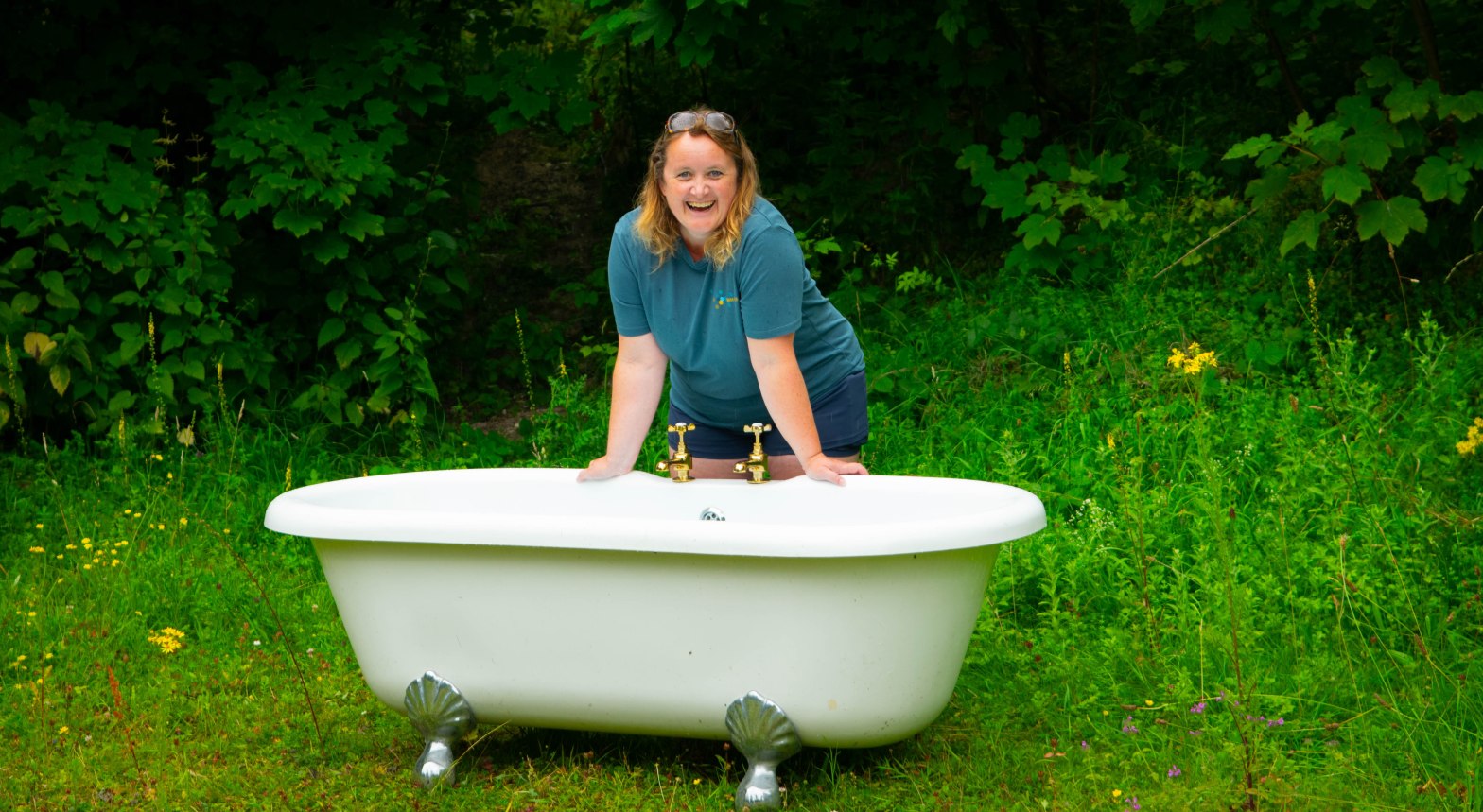
In recent years there has been an increase in the number of people who delve into the power of the cold to support their own health and wellbeing. Much of it is thanks to the “Ice Man”, Wim Hof – a Dutch extreme athlete who has made a name for himself by taking on extreme challenges to prove the body is capable of more than we ever give it credit for. Across social media you’ll find images of professional athletes – from football players, Formula One drivers and track and field stars – along with celebrities and influencers stepping into ice baths and cold plunges and singing the praises of the benefits they get from it. Perhaps you’ve seen some of these and are tempted to give it a try? If so – read on as this is a guide to helping you step into the cold safely.
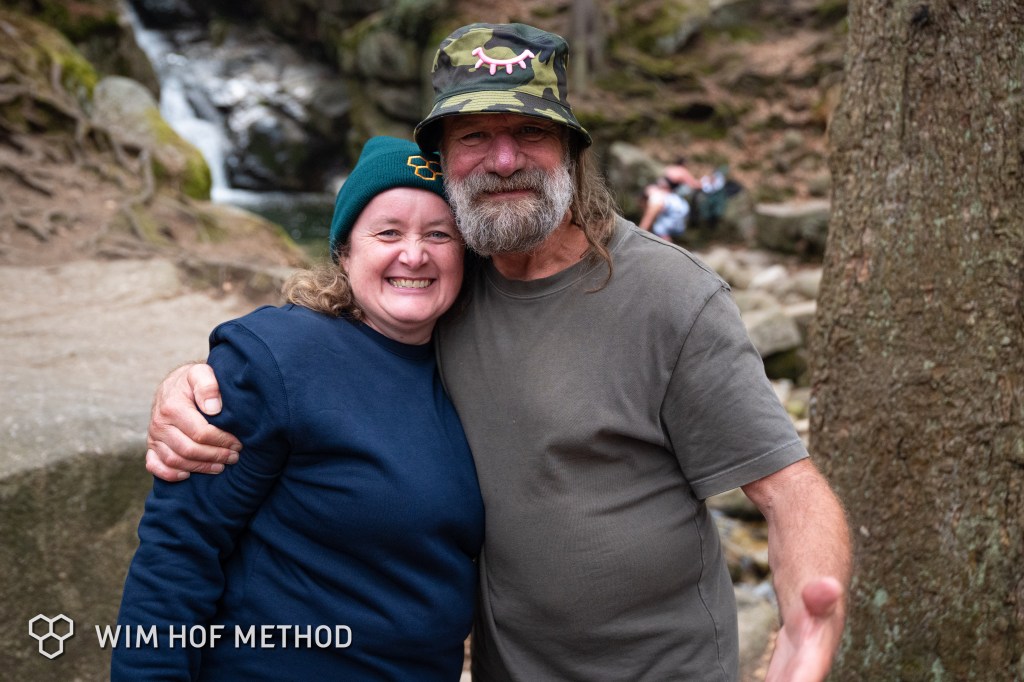
There is a lot of misinformation out there about cold exposure practices so how do you know you are being given the correct information? An easy way is by going to a Wim Hof Method instructor for advice. To become a Wim Hof Method instructor you have to go through intense training and pass annual exams to prove you are up to date with the latest scientific research and safety protocols. There are other programmes out there that train people to be cold exposure instructors – but none offer the same level of depth and ongoing training as the Wim Hof Method. You’ll find Wim Hof Method instructors all around the world – across the UK there are quite a few (including me).
What is cold exposure?
As the term suggests, cold exposure is quite literally exposing your body to cold temperatures. By “cold” we are talking about anything from 15℃ (59℉) and below – which isn’t actually as cold as you may think.
There are numerous ways in which you can get cold exposure – cold showers, ice packs on your body, ice baths, cold water swimming, cryochambers or even wearing fewer layers of clothing or shorts during the winter months.
It is possible for anyone to practice one or more of these forms of cold exposure – but if you have certain medical conditions you should refrain from some or consult your doctor before starting. These conditions include:
- Coronary heart disease (e.g. Angina Pectoris; Stable Angina)
- Cold urticaria
- Epilepsy
- Kidney failure
- Raynaud’s Syndrome (Type II)
- High blood pressure (in case of prescription medication)
- A history of serious health issues like heart failure or stroke
- Shortly after an operation – you should wait for new skin to form over any incisions before going into cold water.
- If you suffer from migraines, you need to be cautious about taking ice baths.
Why cold exposure?
Our bodies haven’t evolved greatly from our ancestors. They could deal with the cold much better than we can today because they had to. They didn’t have central heating, insulated homes and countless layers to put on when the weather turned chilly. Through practicing cold exposure we’re returning to that way of being and placing a controlled stressor on our bodies (the cold). We call this a hormetic stressor. If we can train our bodies to deal with this controlled stress – our bodies in turn learn how to handle stress in general much better.
It’s more than that though – the cold has proven benefits for our physical, mental and emotional health. There is a developing mountain of research that is being done to prove this.
A daily habit
The easiest way to bring the cold into your life is through a simple habit – shower as normal and then at the end turn the temperature right down. To start with it may only be for five or ten seconds – but you’ll find that in next to no time at all you can do longer. If you need something to keep you motivated – try this 20 day cold shower challenge. To start with it can be hard – but stick with it. You can do it!
To begin with – don’t put your head under the cold water. Just let it flow over your body. If you have soreness or pain in a particular area of your body – focus the cold water there. Only when you feel more acclimatised to the cold should you put your head under.
Depending on your plumbing set up at home, the chances are that the temperature of the cold water from your tap will be roughly the same as ground water temperature. Across the summer months and into the early autumn this will be warmer than during the winter and spring months
If you ultimately want to be able to take a plunge in an ice bath or go cold water swimming – start with cold showers. They will help your body get accustomed to the cold, and to cold water.
Ice bath or a cold swim?
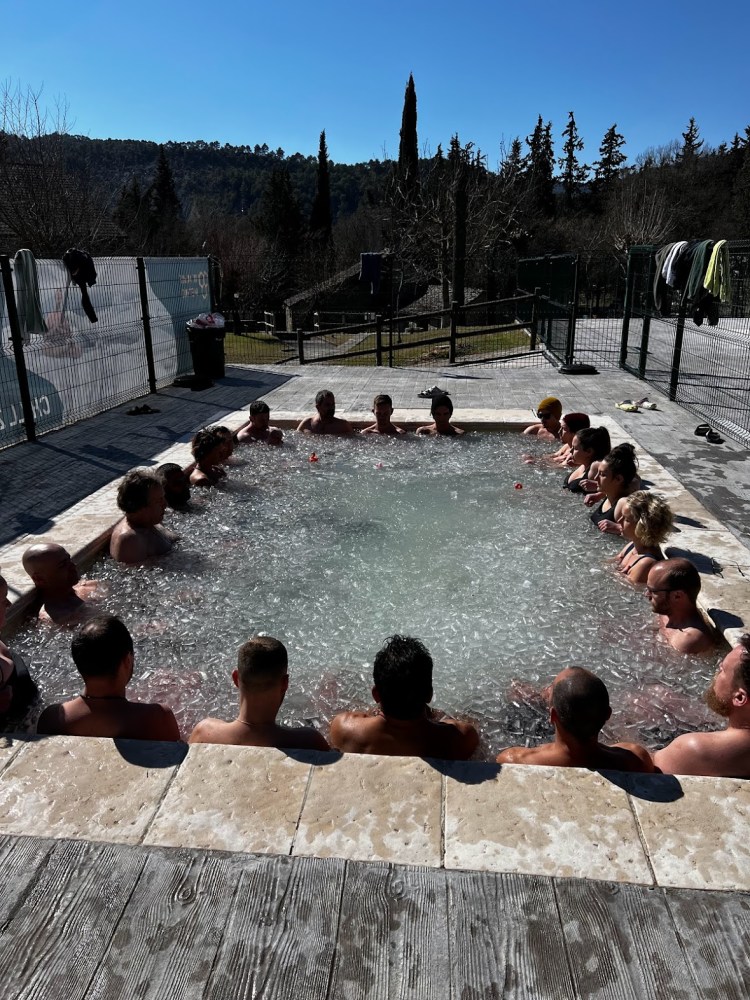
Getting into cold water can be invigorating – and when you step out you feel like there is nothing in this life that you cannot achieve. That said, it should be done with care and with caution. You also should not be alone – especially when you start practicing. Having at least one person with you ensures that someone is keeping an eye on you and helping you stay safe.
An ice bath is a very different experience to having a cold swim. In an ice bath you are sitting still and the water and ice will settle around you. An invisible layer forms around your body, warming you from the cold water that surrounds you. However when you’re swimming – both you and the water are moving. This movement prevents a layer from forming – but because you’re moving you are also generating some extra heat.
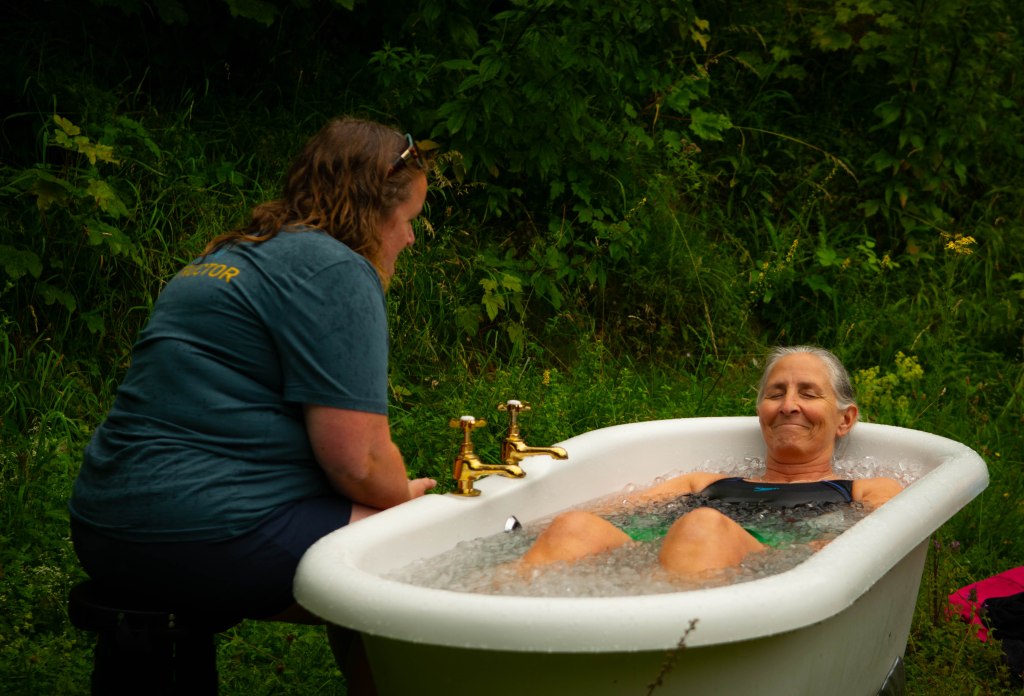
The best way to start doing ice baths is through a Wim Hof Method Fundamentals workshop. Here you will be in a safe space, being guided by a professional. They will be watching you like a hawk, ensuring your safety comes first at all times.
If you are looking to start cold water swimming – look for a local swim group close to where you are. The Bluetit Chill Swimmers have groups dotted around the country and offer training for swim safety. Don’t enter the water alone – make sure that someone is there to keep an eye on you and make sure you are safe and warm up properly afterwards.
Whilst it may seem better to get into cold water slowly – getting your shoulders under the water (or as close to it) as quickly as you can makes it easier for your body. It sounds counterintuitive but with the whole of your core submerged in the water your brain is given one single message of “I’m cold” and it will set into motion processes to help keep you (and in particular your core) as warm as possible in that moment. When you only go waist deep, for example, your body has mixed messages and can’t respond to all of them efficiently. If you’re not used to the cold – keep your head out of the water.
You will find that you feel the cold first in your extremities – your hands, feet, arms and legs. This is your body moving heat away from these and to your core. You may find you start to shiver – if so, let your body shiver. This is creating movement which is generating heat. If you struggle to control the shivers – get out of the water straight away.
When you step into cold water, the cold will take your breath away. Bring your attention to your breath and start to focus on your exhale – lengthening each one. Your exhale is connected to your parasympathetic nervous system – having a longer exhale than inhale will naturally help calm your mind and calm your body in any moments of stress.
Listen to your body. Keep your focus on your exhale. There will be a moment that you suddenly realise you’ve relaxed into the cold, that you are doing something you perhaps otherwise thought impossible. Enjoy that moment. Enjoy the sensations that come with it.
Wim Hof is a man of many phrases and sayings – one is “there’s no ego – it’s we go”. When you’re in the cold there is no place for your ego. It’s important to remember it’s not a competition as to who can stay in the longest. All you need is 2-3 minutes to get the benefits. You may feel you can do longer – but always ask yourself why you want to?
Warming Up
When you step out of the cold water your instinct may be to towel yourself dry or put layers of warm clothing on. Don’t. Or at least don’t do it straight away. All this will do is trap the cold inside you and give your body an artificial sense of being warm – instead we want to warm up from the inside out.
You will have colder blood running through your extremities – we want to get that blood warmed up. The best way to do this is through exercise. In the Wim Hof Method we’ll teach you to do “horse stance” – but you may prefer to do star jumps or jog on the spot. The key is to work your large muscle groups – as you work them they generate heat and will help warm the blood back up again.
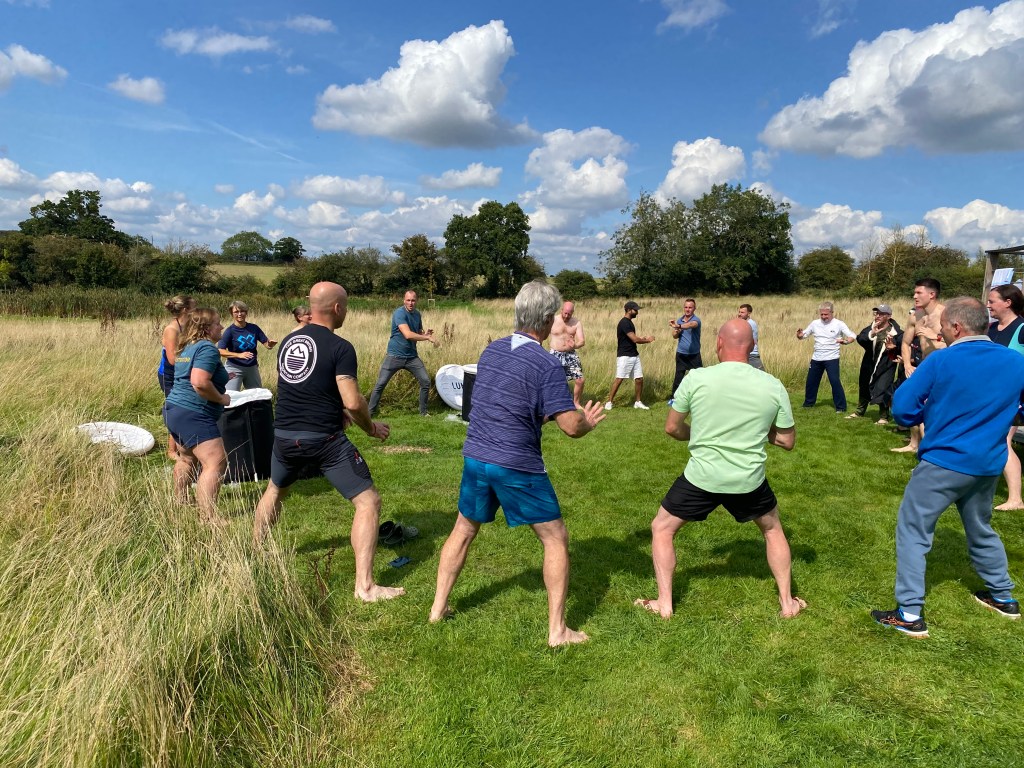
You will find you warm up quicker than you may think doing this – only when you feel you are warmer should you then put warmer clothes on. In the winter months – I’m a fan of the waterproof lined trousers from Cuddlr – possibly the warmest trousers I’ve ever worn!
There has been an increase in Wild Saunas across the country. These can be a very appealing prospect after a cold dip. If you are going to try contrast therapy (hot and cold) – you should end on cold and warm up through exercise rather than with a sauna. This will help you warm up properly and avoid an afterdrop an hour or so later (this is where cold blood from your extremities enters your core and cools it down – it can be more dangerous than the cold exposure in the first place).
Getting cold without water
You can experience the cold without having to go into a cold body of water or an ice bath. When the outside temperature drops all you need to do it step outside with fewer layers of clothing on than perhaps you otherwise would. Go for a walk wearing shorts and a t-shirt or walk barefoot on snowy or frosty ground.
If you’d rather stay indoors – turn the heating down or off. Get used to keeping the indoor temperature a few degrees cooler than perhaps you’d ordinarily like can help.
The ice packs you bought back in the summer for your picnics – they can be a great form of cold exposure if you’re struggling with aches and pains in one particular part of your body. Wrap one in a tea towel and hold it in place for around 10 minutes. Do that a few times throughout the day and you should notice a difference.
What are you waiting for?
The cold is powerful. Embracing the chill and changing your relationship with the cold has the potential to help you live a happier, healthier and stronger life. As we’ve explored, there are many different ways you can bring the cold in to your life – from turning the temperature down on your shower for the final ten seconds to cold water swimming or taking an ice bath. The hardest part is taking the first step into the cold. The second step will come pretty quickly after.

